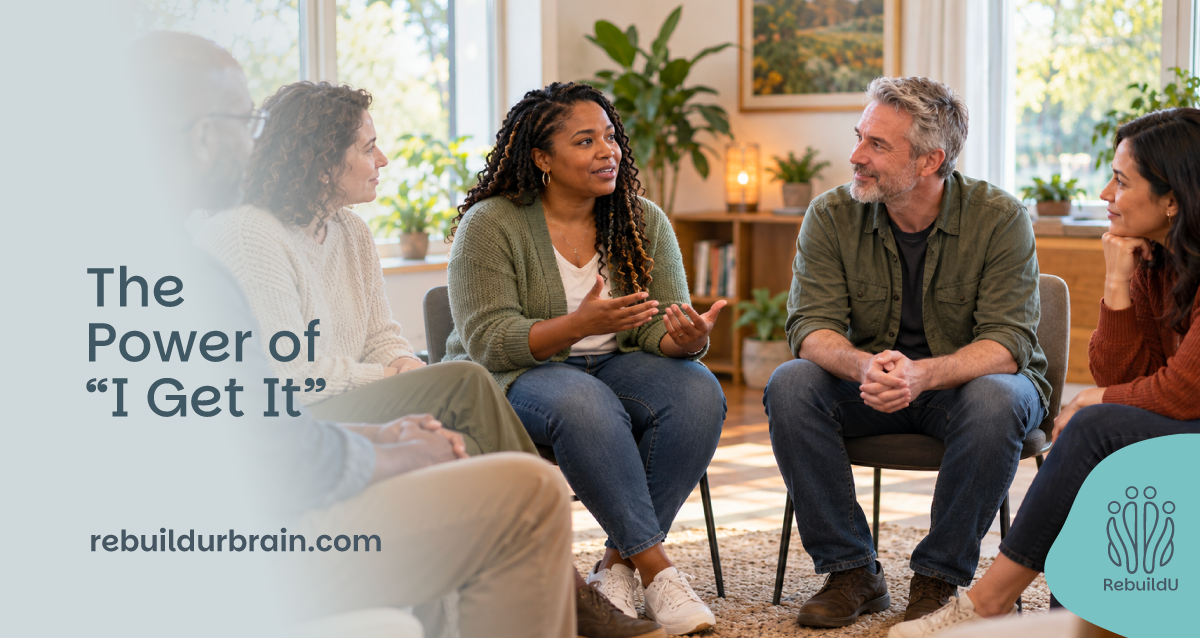
Peer support after brain injury helps survivors feel understood, less alone, and more hopeful. Learn why hearing “I get it” matters so much in recovery.
“Sometimes I just need to hear from someone else who’s going through the same thing. It reminds me I’m not crazy and I’m not alone.”
In my work within the brain injury community, I’ve heard some version of this sentiment more times than I can count.
There’s a difference between “Wow, that sounds hard,” and “I’m having a hard time with that today too.” Both have their place. Both are meaningful. But sometimes, we just need to know we’re not alone in our specific struggle. That’s when we need the healing power of “I Get It”, and why peer support after brain injury matters so much.”
I wish I didn’t have so many stories to tell of folks who felt like they were crazy or overly dramatic or just not able to get it together after a brain injury. It’s a common occurrence for these individuals to keep those feelings to themselves because they’ve not been informed of the very real potential impacts of brain injury. Even injuries diagnosed as “mild” can result in daily challenges.
When a person’s brain has been injured, they may look “normal” on the outside, if not immediately, then eventually when external injuries are healed. There is no visible reminder that a person’s brain function has been disrupted. Because the people they work with, their family, and everyone who cares about them wants them to be OK, they may unintentionally create an environment in which the normal-appearing person with brain injury feels compelled to hide any challenges they are experiencing, such as difficulty with memory or anxiety. They want to be back to normal more than anything. And yet, they are carrying symptoms that may or may not pop up on any given day. And they themselves have no idea if or when those symptoms will subside, temporarily or for good.
This is where the power of “I get it” shows up.
Being with others who understand what we’re going through because they’ve been there too doesn’t just feel good. Research shows it IS good for us.
A 2019 study examining peer support among young adults with brain injury found that meeting with others who had experienced brain injury helped participants feel understood, less alone, and more hopeful about their futures. Participants described discovering that they were not alone in their specific struggles, which contributed to psycho social recovery.
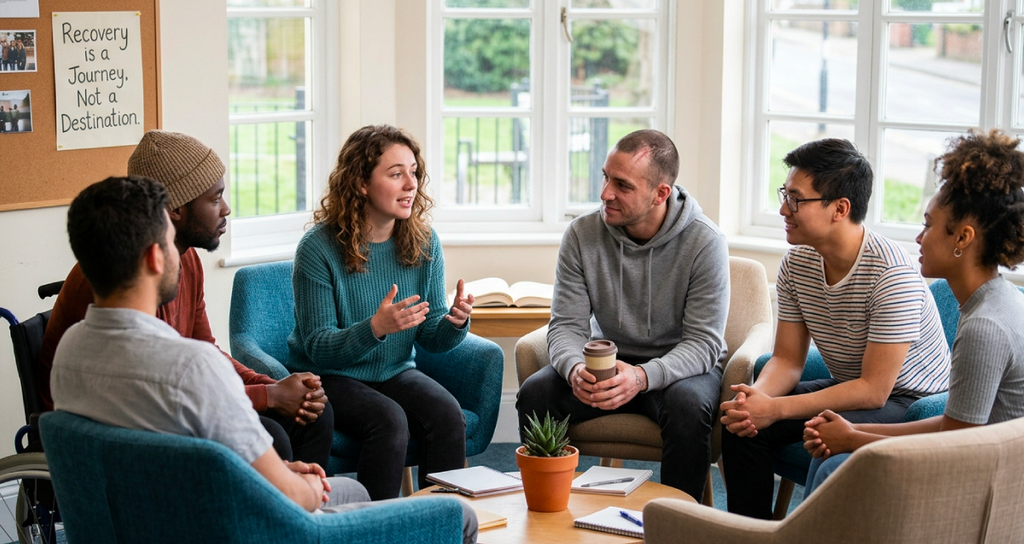
The Power of Being Understood
One of the most difficult aspects of brain injury is that its effects can be largely invisible. A person may be struggling with fatigue, sensory overload, irritability, or difficulty concentrating while appearing completely fine to everyone around them. When they continually hear people they care about saying, “You look great!” they can begin to question themselves or minimize their internal struggles.
Peer support interrupts that cycle and sends a much-needed message — “I see you.”
When someone says, “That happens to me too,” it provides something that even the most compassionate friend or professional may not be able to offer: lived understanding. Research on peer support for people with brain injury identifies shared experience as a unique source of validation, belonging, and emotional support.
Reducing Isolation
Social isolation is common after brain injury for a variety of reasons. Changes in cognition, communication, personality, employment, and ability to be in groups of people can make it difficult to maintain previous relationships and activities. Research shows that many survivors report unmet needs related to social connection and difficulty reintegrating into the community after rehabilitation ends.
Support groups can provide a place to rebuild those connections. Some may develop new friendships within the group that last long after their need to be in the group itself. Some may simply find a welcome respite from having to explain or defend every symptom or difficult day. Some may find a sense of purpose in encouraging others within the group.

Hope Matters
Researchers have also observed that increased hope is a benefit of interacting with peers after brain injury. When a person is newly injured, hearing from someone who is a few months, a few years, or even a decade further along in their journey can provide a powerful reminder that continued progress is possible.
In the brain injury peer-support literature, participants frequently describe gaining perspective, learning practical coping strategies, and developing a greater sense of possibility for the future when interacting with peers who have successfully navigated similar challenges.
Hope doesn’t cure brain injury. It doesn’t eliminate its symptoms.
But hope can help people stay engaged in recovery, continue asking for support, and believe that life can still be meaningful and fulfilling.
Healing Doesn’t Happen Only in Therapy
All the heavy hitters in the brain injury treatment realm — therapy, medical care, and rehabilitation services — are incredibly important. But healing also happens in conversations. It happens when someone admits they’re exhausted and another person nods knowingly. It happens when someone shares a memory strategy that actually works. This happened just today in one of my support groups. It happens when a person who has spent months wondering if they’re “crazy” discovers that many others with brain injury have experienced the exact same thing.
Peer-based support programs after brain injury are increasingly being recognized as playing a vital role in social and emotional recovery, which is just as important as physical recovery. Peer support may improve self-efficacy, emotional well-being, quality of life, and community participation after rehabilitation.
No one should have to navigate brain injury alone. While every person’s recovery journey is unique, there is tremendous power in gathering with people who understand the challenges, frustrations, and victories that can come with life after brain injury.
There is no one-size-fits-all tool or intervention that moves every person with brain injury toward healing in the same measure. Every tool has its place. The therapy sessions. The physical rehabilitation work. The medical interventions.
And sometimes, what’s needed most is to hear four simple words:
If you’re looking for your “I Get It” people, RebuildU is here to help. Our peer support group offers a welcoming place to connect, share experiences, learn from one another, and discover that you’re not alone on this journey.
Leave a Reply